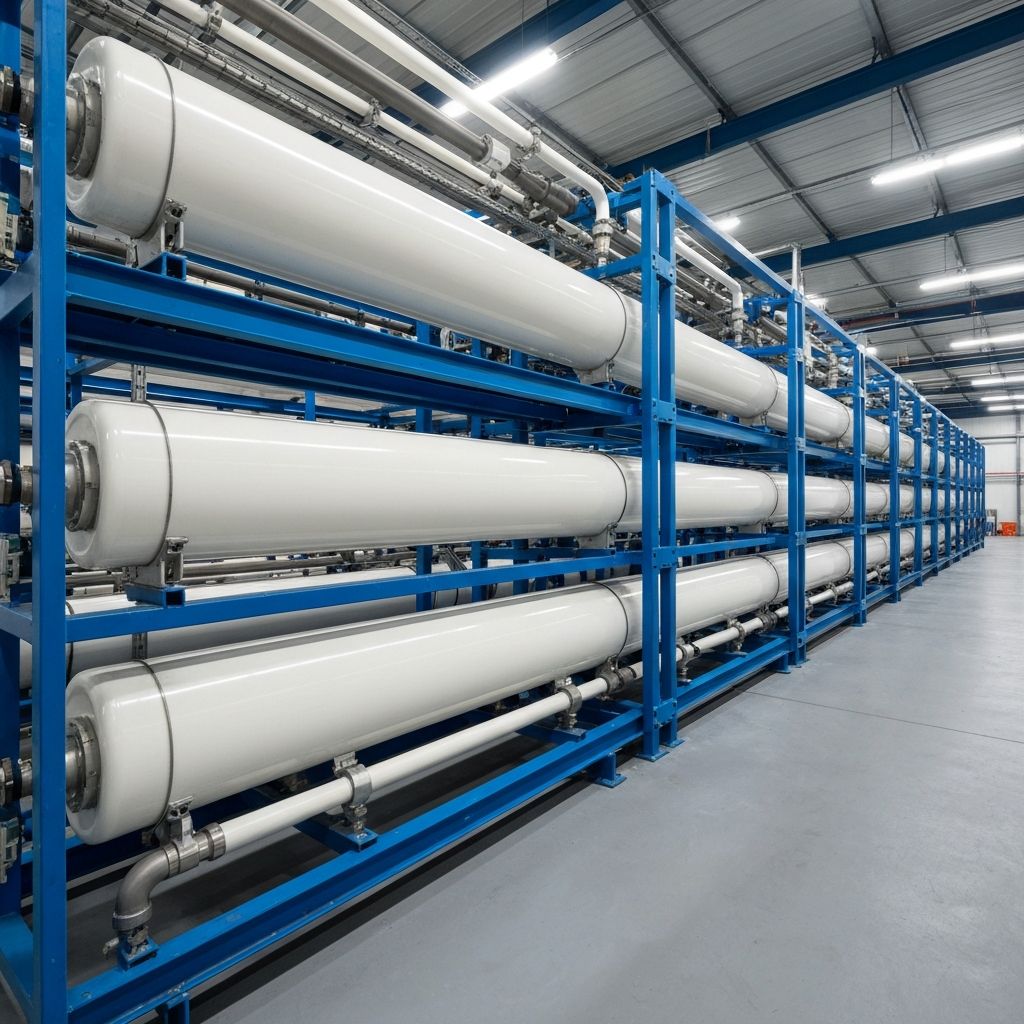
Why RO Cleaning Is Necessary for Long-Term Performance
RO membranes are the heart of any water treatment system. Cleaning is essential to maintain efficiency, protect the membrane, and ensure consistent output water quality.
Table of Contents
1. What Happens When RO Is Not Cleaned?
Over time, impurities in the feed water such as salts, silica, organics, microbes, and colloids deposit on the membrane surface and within the membrane pores. This fouling leads to:
Reduced Permeate Flow
Fouling creates resistance that lowers water production.
Increased Operating Pressure
The system works harder, consuming more energy.
Poor Water Quality
Higher TDS or conductivity may occur in permeate.
Higher Operational Costs
More energy, more chemicals, and frequent breakdowns.
If not addressed on time, fouling can cause irreversible membrane damage and premature replacement, resulting in unnecessary downtime and cost.
2. Common Fouling Types in RO Systems
Understanding the type of fouling is the first step to effective cleaning. The most common fouling types are:
Scaling (Inorganic Fouling)
Caused by salts like calcium, barium, strontium, and silica. It is the most common and must be controlled through antiscalant dosing and proper recovery.
Organic Fouling
Caused by natural organic matter, oils, and residual chemicals. Leads to sticky deposits on the membrane surface.
Biofouling
Caused by bacteria, algae, and microorganisms forming a biofilm layer. Common in systems with poor pretreatment or sanitation.
Colloidal & Particulate Fouling
Fine particles, silt, and colloids deposit on the membrane surface and block the flow.
3. Key Benefits of Regular RO Cleaning
A well-planned cleaning program ensures long-term system performance and reliability.
Restores Permeate Flow
Recovers the original performance of the membranes.
Maintains Water Quality
Ensures consistent TDS rejection and high-quality permeate.
Extends Membrane Life
Reduces wear and tear and delays membrane replacement.
Improves Energy Efficiency
Lower pressure means lower energy consumption.
4. When Should RO Cleaning Be Done?
Cleaning frequency depends on feed water quality, pretreatment efficiency, recovery rate, and system operation. General indicators for cleaning:
10–15% drop in permeate flow
10–15% rise in operating pressure
Deterioration in permeate quality
Regular preventive cleaning (every 3–6 months)
Need Help with Your RO System?
Our experts can help you improve performance, reduce downtime, and extend membrane life.